Six spreads, the full seventy-eight cards, and the 1909 illustrations. Nothing is stored and nothing is sent anywhere. Every card links straight to its own page.
This tool shuffles and deals. It does not predict, and it knows nothing about you. The spread is decided by a random number, and the link you can copy reproduces that same draw rather than a new one, which is the only sense in which any of it is fixed.
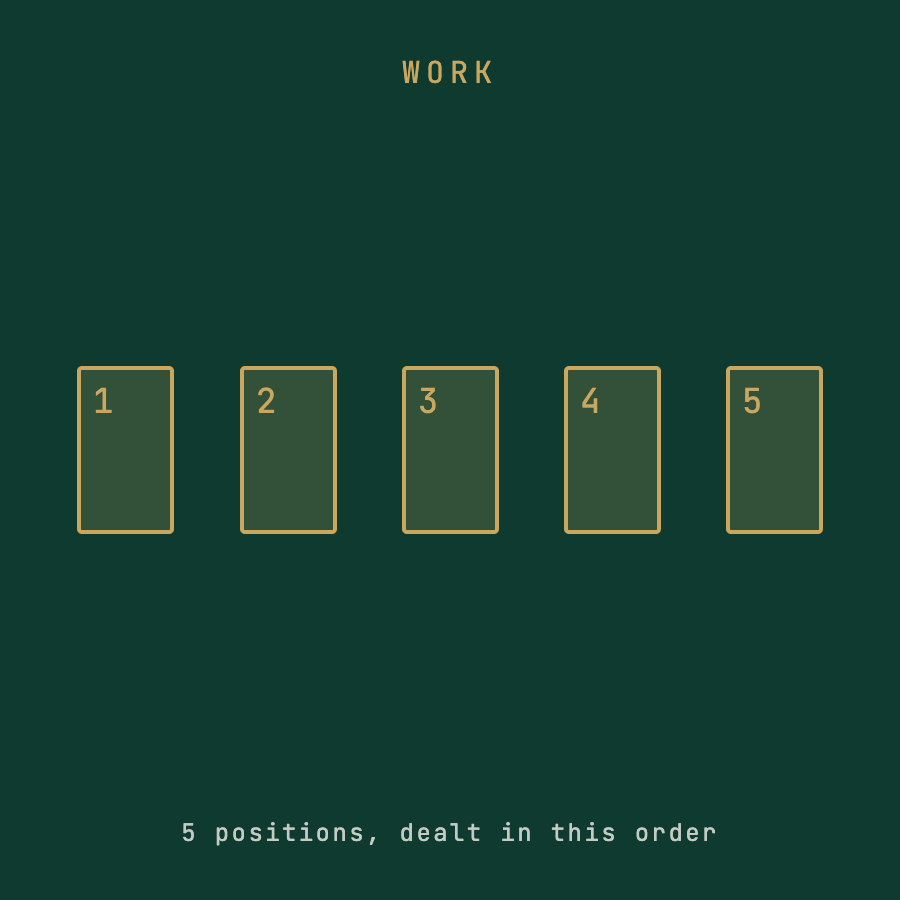
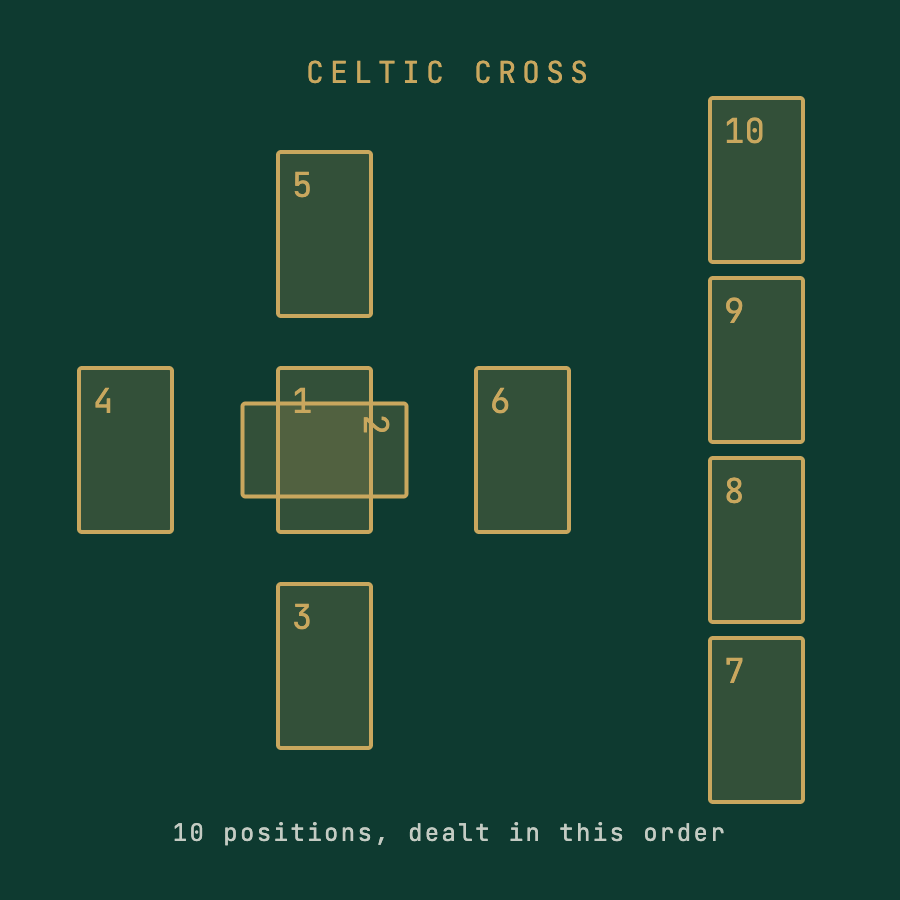
What a reading is useful for is structure: a fixed set of positions to think a question through against. The cards supply the prompts. You supply everything else.
Yes, and no. The draw happens in your browser. The question box never leaves the page, nothing is written to an account, and there is no sign-up.
The spread is generated from a number that goes into the URL. Sharing the link shares that number, so whoever opens it sees the draw you saw rather than a fresh one. Press Draw again for a new number.
It is a preference, not a rule. Waite's own book gives reversed meanings, but plenty of readers work upright only and take difficulty from the surrounding cards instead. Try both and keep whichever produces readings you can actually use.
Not honestly. Counting cards as votes turns a set of images into a coin toss with extra steps. The yes-or-no spread here exists because people look for it, and its own page says the same thing at more length.
The 1909 Waite-Smith deck, drawn by Pamela Colman Smith to Arthur Waite's brief. Those scans are in the public domain. Later recoloured editions are not, so they are not used here.
One card. It gives you nothing to hide behind: no narrative assembled out of three images, and no position that quietly explains away a card you did not like.