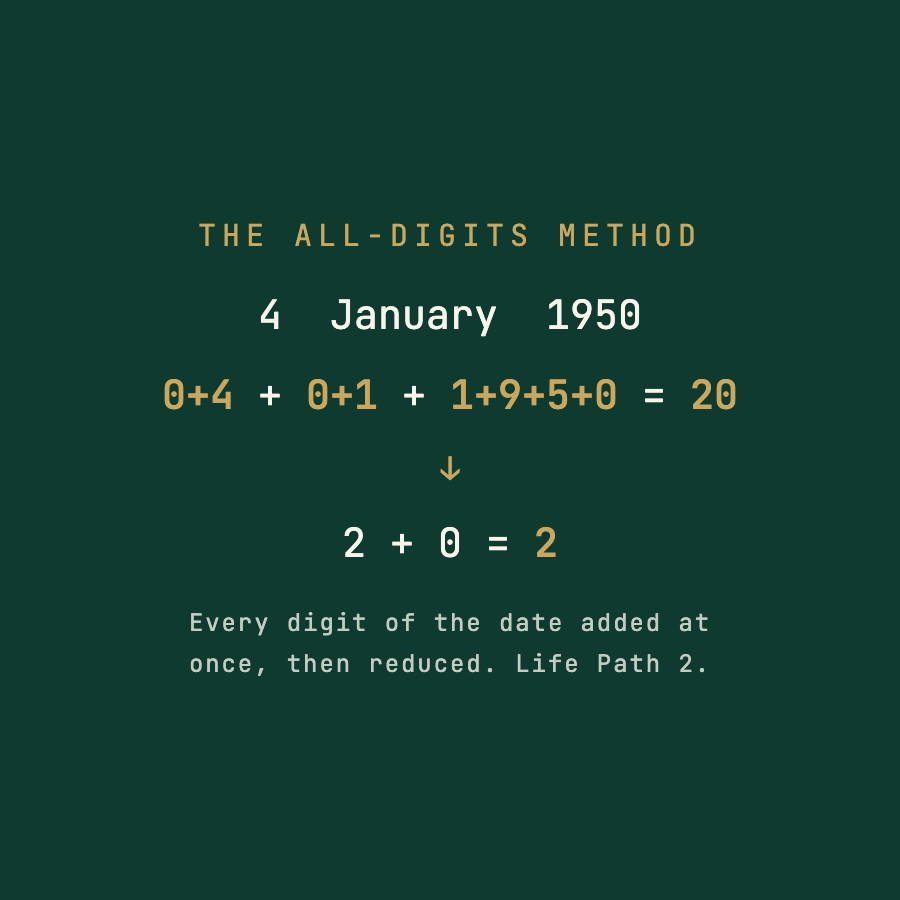
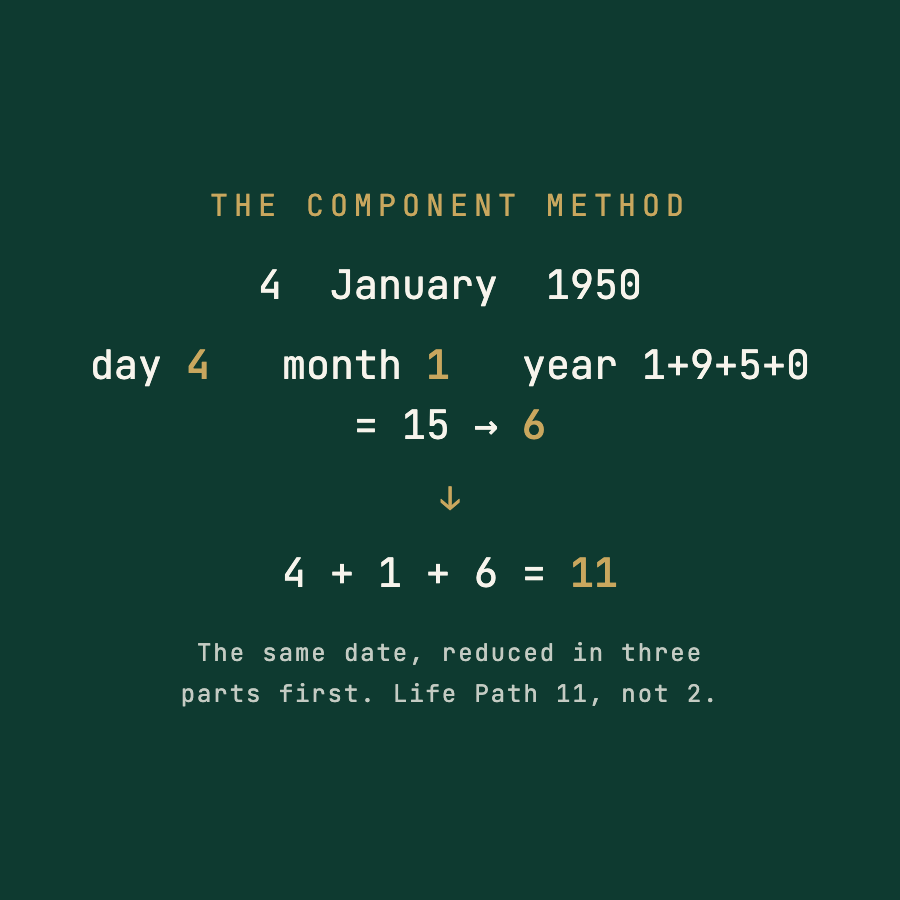
Two schools reduce a birth date differently, and for about one date in eight they disagree. This calculator runs both, shows every step of the arithmetic, and says plainly when they part company instead of quietly picking one.
This is arithmetic. Adding the digits of a date is a well-defined operation, and this page performs it correctly and shows the working. That is the entire technical claim being made.
What the resulting number is supposed to mean about a person is a twentieth-century convention, not a finding. Modern numerology was assembled in the early 1900s by L. Dow Balliett and systematised by Juno Jordan, and the attribution to Pythagoras has no surviving textual support. The number pages say the same at more length.
There is no authority that settles it, and anyone who tells you otherwise is picking a side and not saying so. The all-digits method is the more common one in modern books. The component method is older in print and is the one that preserves master numbers more often. Read both pages and see which describes something you recognise; that is the only test available.
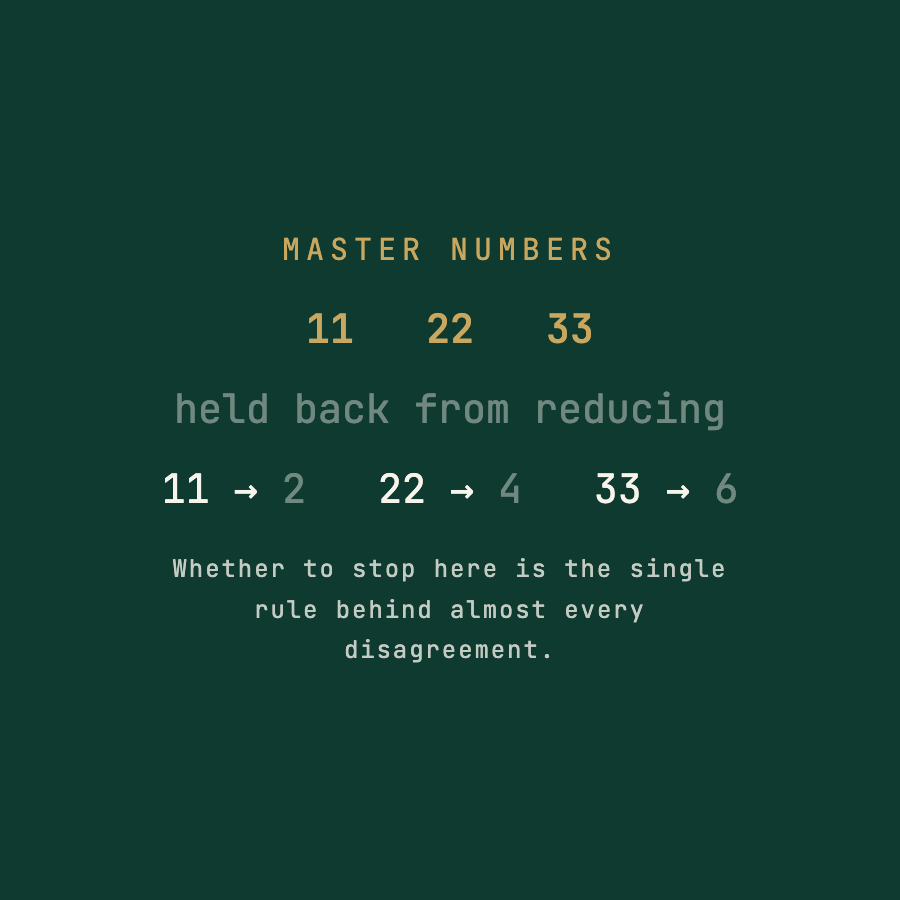
Because reduction is not associative once you stop at master numbers. Reducing 1990 to 1 before adding throws away the fact that the running total would have passed through 29, which stops at 11. That single rule, applied at a different moment, is where nearly every disagreement comes from.
The convention is the full name exactly as first recorded at birth, including middle names, and not a married name or a name you go by. Practitioners disagree about what to do after a legal change, which is worth knowing before you take any of it too seriously.
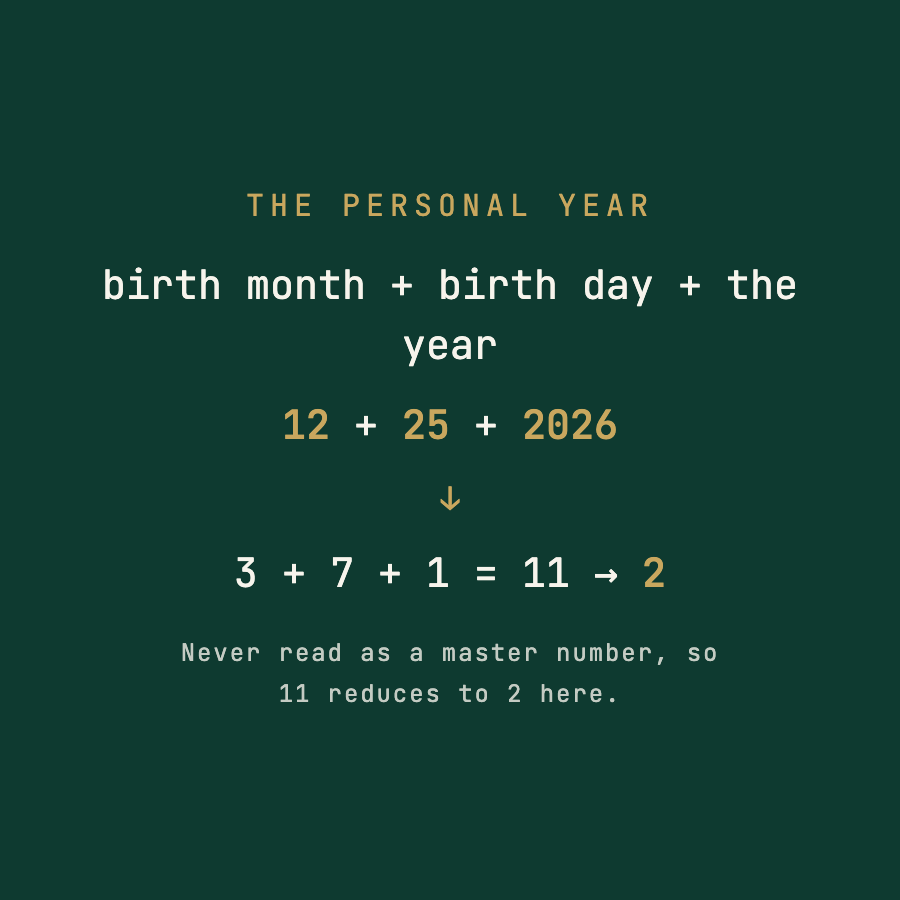
They are treated as different by most modern practitioners and were not always. Some schools also read 44. The calculator marks them where they occur and reduces them where the convention says to, such as in a personal year.
Not in any documented sense. What is sold as Pythagorean numerology was assembled in the early 1900s by L. Dow Balliett and systematised by Juno Jordan. No surviving text ties the letter grid to Pythagoras. The grid is still the grid; the pedigree is marketing.
No. The whole calculation runs in your browser. The date and name never reach a server, and refreshing the page discards them.