- Entry type
- Master Number
- Number
- 22
- Written form
- 22
- Planetary correspondence
- Pluto
- Element
- Earth
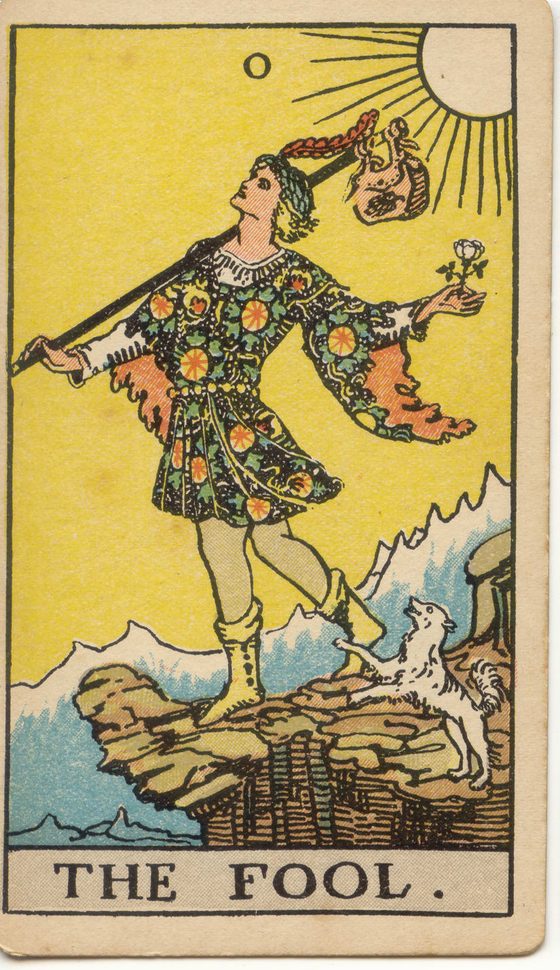
- Matching tarot card
- The Fool
Life Path 22
Life Path 22 is sold as the master builder. It describes ambition attached to method rather than to appetite, and the label arrives with an expectation that the arithmetic underneath it cannot justify.
- building
- scale
- master number
- pressure
- practicality
How the number is worked out
Add every digit of the birth date. For 11 April 1960 that is 4 + 1 + 1 + 1 + 9 + 6 + 0 = 22, and 22 is left standing. Reducing each part first agrees: April is 4, the day 11 is itself a master number and stays 11, and 1960 is 1 + 9 + 6 + 0 = 16, then 7. Then 4 + 11 + 7 = 22.
One school stops there. The other reduces again, 2 + 2 = 4, and reads a Life Path 4 with some of 22's scale attached. Same date, two answers.
Grouping can decide it on its own. For 5 January 1960 the whole date adds to 1 + 5 + 1 + 9 + 6 + 0 = 22, a master number. Reduce the parts first and it is 1 + 5 + 7 = 13, then 4. That birth date is a 22 or a 4 depending only on the order you add in, and no authority in the tradition settles which is right.
What the number describes
Life Path 22 is read as the master builder: the number that takes something large and actually gets it constructed. Where Life Path 11 is handed the vision, 22 is handed the load-bearing work, and it is structurally 4 with the scale increased rather than a different kind of person.
What the reading describes is ambition that runs through method. Not appetite, which belongs to 8, and not initiative, which belongs to 1, but the specific combination of wanting something big and being temperamentally willing to do the tedious middle of it. That combination is genuinely uncommon, and it is the defensible part of the description, because it can be observed in somebody rather than assigned to them.
The rest is the label, and the label does real work on people. Being told you are a master builder sets an expectation of scale that most lives do not meet, and the reading almost never admits that an ordinary competent life is a complete and sufficient answer to it. Beside Life Path 33 the set of master numbers is completed, and the three of them together form a tier whose existence was a twentieth-century decision rather than a discovery about numbers.
What it does well
Finishing at scale. The description is of somebody who can hold a long project across years, keep the detail and the shape in view at the same time, and not lose interest when the work turns administrative. Very few people can do all three at once.
The second is a tolerance for constraint. A 22 is described as working better with a budget, a deadline and a specification than without them, because the limits are what make the thing buildable. That is a real disposition and it is the opposite of how ambition is usually romanticised. None of it predicts that anybody builds anything. It describes what the number is said to make easier, and easier is the entire claim.
Where it goes wrong
The failure mode is the expectation. A person carrying this label measures their life against a standard the label invented, and finds it short. The reading hands somebody the word master and then supplies no way to tell whether they have met it, which produces a particular and quite common kind of unhappiness in people who are doing perfectly well.
The second is pressure converted into control. The scale of the thing being attempted becomes a justification for how the people around it get treated, and the justification is always the project. That is not a fated outcome. It is what happens when somebody believes the work is more important than the working conditions, and this number's description encourages exactly that belief.
In relationships
The reading describes a partner who is committed, present in practical terms, and inclined to subordinate a relationship to whatever is being built. The commitment is genuine. The availability is negotiable, and it usually gets negotiated in one direction.
The specific difficulty is that a 22 will describe the sacrifice as temporary for a very long time. There is always a phase of the project that explains the current absence. Where the question is whether somebody else feels neglected, this number says nothing about them at all. It describes the person who is likely to be doing the explaining, and the honest note is that a decade of temporary is not temporary.
In work
Large projects with a physical or institutional result: engineering, construction, founding organisations, programme management, anything measured in years rather than weeks. The reading fits people who are content to be judged on what exists at the end.
The practical difficulty is that the description invites somebody to aim past their actual resources, and the failure mode is not laziness but overreach. Worth saying plainly: none of this is career advice, and the label does not indicate capability. Whether a particular ambition is achievable depends on skill, capital, timing and a great deal of luck, and a birth date has no contact with any of them. Treating the number as evidence of a mandate is how people commit years to something nobody asked for.
In money
The reading associates 22 with money as material for building rather than as a store of value: capital, funding, resources committed to something rather than held. It is not associated with wealth, and any page that presents it that way has moved from description into marketing.
Nothing here is financial advice. The observation worth keeping is that the described tendency, treating money as an input to a project, makes it unusually easy to underwrite an ambition personally and to keep doing so past the point where the arithmetic stopped working. If the description fits, the useful discipline is a number written down in advance beyond which you will not go.
The lesson it keeps setting
The lesson 22 is said to keep setting is that the scale of a thing does not license the cost of it. Something worth building is still being built by people, on time somebody is not getting back, and the reading tends to treat that as an accounting detail.
Concretely, the recurring test is whether you can name the price of the current phase in specific terms, out loud, to the people paying it. Most people who identify with this number can describe their project in detail and cannot describe its cost in the same detail. The system frames this as a lesson because the situation recurs, which is how habits behave rather than evidence that anything is arranging the recurrence.
The part people leave out
The popular reading sells 22 as potential, and potential is the most expensive thing anybody can be handed. It sets a standard with no completion condition, so the person carrying it is permanently slightly behind an imaginary version of themselves.
The plainer version is that the label mostly produces guilt. People with this number frequently report a low, constant sense that they should be doing something larger, in lives that are by any reasonable measure working. Nothing here diagnoses anyone. It names the shape, because a description that cannot be satisfied is worth recognising as such before spending years trying to satisfy it.
How it meets other numbers
Because 22 reduces to 4, most of the pairings written for it are the pairings written for 4 with more ambition attached, and practitioners reuse them freely. Knowing that is worth more than any individual entry in the list.
With 4 the reading is easy agreement about method and a shared blind spot about whether the plan should exist at all. With 8 the pairing is scale meeting scale, productive and prone to a slow contest over whose project is the real one. With 11 the vision-and-build arrangement is the one the literature likes best, and it fails where the 22 is treated as the practical half rather than as an equal. With 6 the 22 gets somebody who notices what the building is costing. These are tendencies, not matches.
In a personal year
A Personal Year comes from your birth month and day, each reduced, plus the reduced current year. For somebody born on 11 November, in 2026: November is 11 and stays, the day 11 stays, and 2026 is 2 + 0 + 2 + 6 = 10, so 1. Then 11 + 11 + 1 = 23, and 2 + 3 = 5.
Reaching an actual 22 personal year requires the components to total exactly 22, which is uncommon, and most writers reduce personal years to a single digit regardless. The stopping-rule argument that decides your Life Path applies here in exactly the same way, and it is the reason two calculators can hand you different years.
Where the symbol comes from
Twenty-two is two elevens, or eleven doubled, which is the whole of the arithmetic and the reason it inherits 11's language with the practical end emphasised. Four is what it reduces to, and the square is where the building associations come from.
Two of the correspondences here deserve a note. The planet given is Pluto, identified in 1930 and reclassified as a dwarf planet in 2006; the numerology tables did not change, which tells you how much authority sits behind them. The tarot pairing is The Fool, which is unnumbered or zero in most decks and is counted as twenty-two only in the orderings that place it at the end of the trumps rather than the start. Both attributions are choices somebody made, relatively recently, and neither is a discovery.
Where this meaning came from
Nothing about master numbers is ancient. Pythagoras wrote nothing that survives, no ancient source describes a system read from birth dates, and Greek arithmology as recorded by Nicomachus of Gerasa around 100 CE covers the numbers one to ten and contains no tier above them.
The working system dates from the early 1900s: L. Dow Balliett, publishing from 1903, and Juno Jordan, who studied with her and standardised the modern chart of Life Path, Expression, Soul Urge and the rest through the middle of the century. Eleven and twenty-two are the pair that appears in that mid-century literature as master numbers, which makes them the older two of the three.
What the tradition never produced is a rule for when to stop reducing. That gap is why the same birth date is reported as 22 by one practitioner and 4 by another, both correctly following a standard method. A category defined a hundred years ago, with an unsettled procedure and a flattering name, is a reasonable thing to read about and a poor thing to organise a life around.
The common misreading
The first misreading is treating the label as a forecast of achievement. Master builder is a phrase, not a measurement, and it gets delivered to people in their twenties who then spend a decade feeling behind. The number describes an inclination toward large, methodical work. It has no access to whether anybody gets the chance to do any.
The second is rank. Twenty-two gets read as an upgrade on 4, and the person with the 4 is quietly told they are the lesser version of the same thing. Across every date from 1950 to 2009 the whole-date method yields 22 for about two per cent of birth dates and the parts-first method for about three per cent, and the two sets are not even the same people.
The third is certainty. Anybody relying on this number should know which method produced it, because the other one commonly gives 4, and a reading built on the label rather than on the description is built on a procedural coin toss.
Questions to sit with
- What is the current phase costing, in hours and in people, stated as specifically as you state the plan?
- Which method gave you this number, and what does the other one give?
- What would be enough, and how would you know you had reached it?
- Who has been told this arrangement is temporary, and for how long have they been told that?
Work out your own number, both ways.