- Entry type
- Master Number
- Number
- 33
- Written form
- 33
- Planetary correspondence
- Venus
- Element
- Water
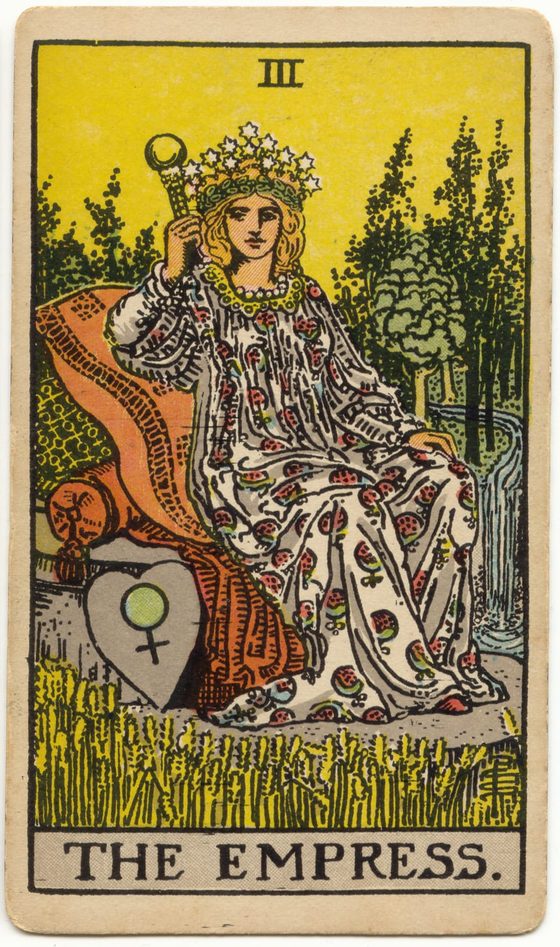
- Matching tarot card
- The Empress
Life Path 33
Life Path 33 is the master number a large part of the field does not accept. It is read as service raised to a vocation, and which method you use changes how many people have it by a factor of six.
- service
- teaching
- master number
- obligation
- disputed
How the number is worked out
Add every digit of the birth date. For 22 September 1964 that is 9 + 2 + 2 + 1 + 9 + 6 + 4 = 33, and 33 stands. Reducing each part first agrees here: September is 9, the day 22 is itself a master number and stays 22, and 1964 is 1 + 9 + 6 + 4 = 20, then 2. Then 9 + 22 + 2 = 33.
One school stops. The other reduces again, 3 + 3 = 6, and reads a Life Path 6 carrying some of 33's weight.
Grouping decides it far more often here than for the other two master numbers. For 19 July 1960 the whole date adds to 7 + 1 + 9 + 1 + 9 + 6 + 0 = 33. Reduce the parts first and it is 7 + 1 + 7 = 15, then 6. Across every date from 1950 to 2009, the whole-date route gives 33 for 5.9 per cent of birth dates and the parts-first route for 0.9 per cent. Same tradition, six times the population.
What the number describes
Life Path 33 is read as the master teacher: care raised from a disposition to a vocation, service offered at a scale beyond a household. Structurally it is 6 amplified, in the way 11 amplifies 2 and 22 amplifies 4, and its description borrows heavily from what the system says about responsibility for other people.
It is also the most contested number in the modern system. A substantial part of the field does not recognise it at all, on the grounds that it was added later than the other two and that the arithmetic producing it is unstable. Any page that presents 33 as settled has skipped the part a reader most needs, which is that the category itself is still being argued about.
What survives once the vocation language is set aside is a description of somebody whose sense of obligation runs past the people they actually know. That is a real way of being in the world, it is exhausting, and it is not always chosen. Beside Life Path 9 the same breadth appears without the duty attached, which is the more comfortable version of it. What the number cannot do is tell anybody whether the obligation they feel is a calling or a habit learned early.
What it does well
Sustained care at a distance. The description is of somebody who keeps showing up for people who cannot repay it, across years, without the relationship needing to be reciprocal to be maintained. Institutions that work usually contain two or three people doing this.
The second is a high tolerance for other people's difficulty. Where most people withdraw from a situation that is not improving, this reading describes somebody who stays in it and stays useful. That is genuinely valuable and it is also the mechanism by which the number's failure mode operates, which is worth holding in mind. None of it predicts a life of service, and the label confers no aptitude for any of the jobs it is usually attached to.
Where it goes wrong
The failure mode is obligation without limit. A description built around service supplies no stopping point, so the person carrying it keeps absorbing until something gives, and reads the absorbing as who they are rather than as a decision they keep making.
The second is the vocation trap. Being told your purpose is to serve makes it very difficult to want anything for yourself without treating the wanting as a lapse. That is a specific and fairly cruel effect of a specific piece of flattery, and it lands hardest on people who were already inclined to over-function. The literature calls this the burden of the master number. It is more accurately the cost of being told you have one.
In relationships
The reading describes a partner who gives generously and is uneasy receiving, and who can turn a relationship into another site of care without either person deciding that is what happened. The generosity is real. The asymmetry is the problem.
The specific difficulty is that a person cast as the one who gives has no legitimate way to be tired. Complaint reads as failure against the description, so it comes out sideways or not at all. Where the question is what somebody else feels, this number has nothing to say about them. It describes one person's default position in a relationship, and defaults can be renegotiated, whatever the label suggests.
In work
Teaching, medicine, ministry, care work, advocacy, running an institution whose purpose is other people. The reading points at these firmly enough that it functions as vocational instruction, which is exactly what it should not be.
The practical difficulty is straightforward and serious: those jobs require training, stamina and specific competence, and a birth date confers none of them. People have chosen underpaid caring work on the strength of a numerology reading and found themselves unqualified and unable to leave. Worth saying plainly: none of this is career advice. If the description resonates, that is information about how you already are, not a mandate about what you should do for money.
In money
The reading associates 33 with money as something to be directed toward others, and with a marked discomfort about charging properly for work. The second half is the part with consequences, and it appears constantly in the caring professions with or without any numerology attached.
Nothing here is financial advice. The observation worth keeping is that somebody who believes their purpose is service will systematically undercharge, defer their own provision, and describe both as integrity. If that fits, the correction is not a change of values. It is finding out what the work is actually worth and asking for it.
The lesson it keeps setting
The lesson 33 is said to keep setting is that service without a limit stops being service and becomes a way of avoiding a life of your own. The distinction is not visible from inside, because both look like doing the right thing.
Concretely, the recurring test is whether you can want something purely for yourself, name it out loud, and pursue it without framing the pursuit as ultimately being for somebody else. Most people who identify with this number find that genuinely difficult. The system calls it a lesson because the situation recurs, which is how habits behave and not evidence that anything outside the person is arranging the repetition.
The part people leave out
The popular reading sells 33 as the highest number in the system, and the flattery is heavier here than anywhere else. What it leaves out is that a person told their purpose is to serve has been handed an identity that quietly forbids ordinary self-interest.
The plainer version is that martyrdom and vocation use the same vocabulary, and this label supplies the vocabulary at no cost. It also confers status, which is the part nobody says out loud: being the one who gives is a position in a family or an organisation, and positions get defended. Nothing here diagnoses anybody. It names the shape so it can be checked against an actual life.
How it meets other numbers
Because 33 reduces to 6, almost every pairing written for it is a pairing written for 6 with the intensity raised, and practitioners reuse them without saying so. That is the most useful thing to know before reading any compatibility list for this number.
With 6 the reading is warmth and a shared blind spot about who is allowed to need things. With 9 the care widens and both people become slightly abstract about each other. With 22 the two are described as the practical and pastoral halves of a large undertaking, which works while both are visible and fails when one becomes support staff. With 1 the pairing is a giver and a driver, workable and easy to let calcify. These are tendencies, and none of them see whether either person can say no.
In a personal year
Personal years come from your birth month and day, each reduced, plus the reduced current year. For somebody born on 22 September, in 2026: September is 9, the day 22 stays 22 as a master number, and 2026 is 2 + 0 + 2 + 6 = 10, so 1. Then 9 + 22 + 1 = 32, and 3 + 2 = 5. A Personal Year 5.
Note that even the most master-heavy birth date does not produce a 33 year here. Reaching one requires the three parts to total exactly 33, which is rare, and most writers reduce personal years to a single digit in any case. The stopping rule is unsettled at every level of this system, not only at the Life Path.
Where the symbol comes from
Thirty-three is three elevens and a doubled three, and it reduces to six. Most of what gets attached to it comes from outside numerology altogether: the traditional age of Jesus at the crucifixion, the thirty-three degrees of Scottish Rite Freemasonry, the thirty-three vertebrae counted in some anatomical schemes. None of those sources are talking about birth dates, and borrowing their weight is the oldest move in this material.
The two correspondences given here are both already in use elsewhere in the same table. Venus belongs to 6, which is what 33 reduces to, and The Empress is trump III and the card given to 3. The duplication is not a hidden resonance. It is what happens when a later addition has to be fitted into a table that was already complete.
Where this meaning came from
Master numbers are a twentieth-century addition and 33 is the latest of them. Pythagoras left no writings, no ancient source describes a birth-date method, and Greek arithmology as recorded by Nicomachus of Gerasa around 100 CE treats the numbers one to ten with no tier above them.
The modern system was assembled by L. Dow Balliett, publishing from 1903, and systematised by Juno Jordan, who studied with her. Eleven and twenty-two appear as the recognised master pair in the mid-century literature. Thirty-three arrived afterwards, spread through the numerology publishing of the later twentieth century, and a significant share of practitioners still do not accept it, some allowing it only when both parents' charts support it or when the date produces 33 by a particular route.
That is the honest position. This is not a disputed detail inside an established system. It is a contested addition to a system that is itself about a hundred years old, and the disagreement is live and unresolved among the people who do this professionally.
The common misreading
The first misreading is treating 33 as settled. It is presented on most sites as the highest and rarest Life Path, with no mention that many practitioners reject the category and that the two standard calculations disagree about it more than about any other number. A reader deciding what to make of their chart needs that first, not last.
The second is rarity as distinction. Thirty-three is described as vanishingly rare, and under the parts-first method it is uncommon, at roughly one birth date in a hundred. Under the whole-date method it is about one in seventeen. Rarity here is a property of the procedure, not of the person.
The third is the vocation reading, which does the actual harm. Master teacher gets delivered as an instruction, and people have reorganised their working lives around it. The number describes an existing inclination toward service. It cannot tell anybody what to do, and it certainly cannot tell them what they owe.
Questions to sit with
- Which calculation produced this number for you, and what does the other one give?
- What do you want that has no justification in terms of somebody else's benefit?
- Who would have to take something over if you stopped, and have you ever asked them?
- When did you last charge or ask for what the work was actually worth?
Work out your own number, both ways.