- Entry type
- Life Path
- Number
- 6
- Written form
- 6
- Planetary correspondence
- Venus
- Element
- Earth
- Matching tarot card
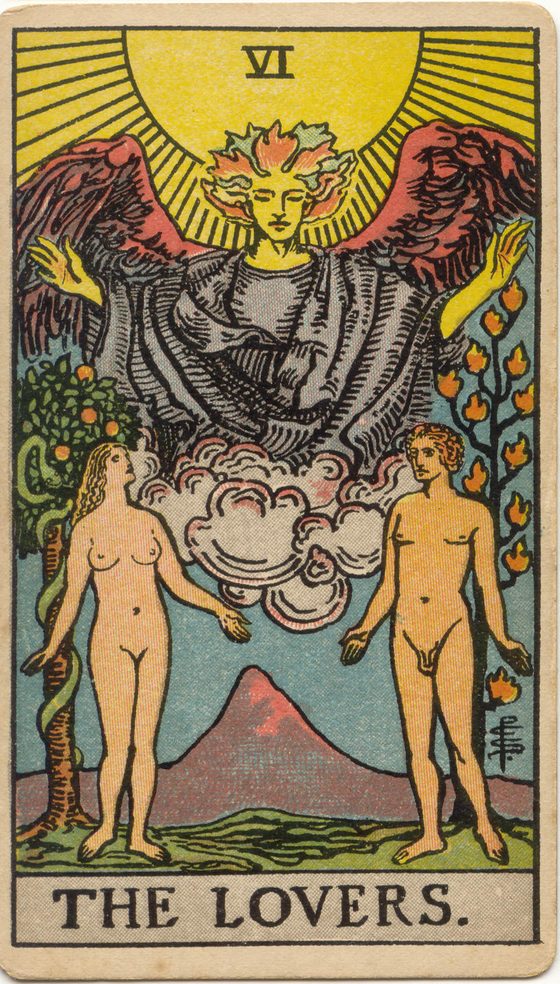
- The Lovers
Life Path 6
Life Path 6 is the number of the person the family calls. It describes someone who takes responsibility for others by reflex, and it is honest that being indispensable is a position as well as a kindness.
- responsibility
- care
- service
- duty
- over-functioning
How the number is worked out
Add every digit of the birth date and reduce. For 18 August 1978 that is 8 + 1 + 8 + 1 + 9 + 7 + 8 = 42, then 4 + 2 = 6.
The other method reduces each part first. August is the eighth month, so 8. The day 18 is 1 + 8 = 9. The year 1978 is 1 + 9 + 7 + 8 = 25, then 2 + 5 = 7. Then 8 + 9 + 7 = 24, and 2 + 4 = 6.
Both give 6, and for most dates they always will, because the order in which digits are added cannot change the final single figure. The two methods separate only where one route lands on 11, 22 or 33 and stops there by convention. 13 September 1978 totals 38, then 11, and is usually kept; reduce the parts first and it gives 9 + 4 + 7 = 20, then 2. That matters here, since Life Path 33 is the master form of 6, and nothing settles which method decides it.
What the number describes
Life Path 6 is read as the number of responsibility for other people. Not affection in general, which every number gets a share of, but the specific reflex of noticing that something needs doing for somebody and doing it before being asked. The family organiser, the person who checks in, the one who knows everybody's situation.
What the reading describes is a default setting rather than a virtue. A 6 takes responsibility the way other people take a breath, and the trouble is not that this is bad but that it is undiscriminating: it happens whether or not the responsibility is theirs, whether or not anybody wanted it, and whether or not the recipient is capable of managing perfectly well.
The card given is The Lovers, trump VI, which in Smith's drawing is less about romance than about a choice made in the open with something at stake. Beside Life Path 2 the caretaking doubles and nobody states a need directly. Beside Life Path 9 the care widens out from the household toward the abstract, and gets vaguer as it goes. What the number offers is a description of where somebody's attention automatically travels, which is toward other people's situations, and not a statement about how much they are loved in return.
What it does well
Turning up. A 6 is the person who arrives with food, sits in the hospital corridor, remembers the anniversary of the bad thing, and does it again the following year when everybody else has moved on. That is not a small quality and there is no substitute for it.
The second is practical competence with other people's difficulties. The reading describes somebody who does not freeze in a crisis involving a person, who can hold several people's needs in mind at once and sequence them sensibly. Alongside it sits an unusual willingness to do unglamorous work for no credit. None of this predicts a happy family or a settled life. It describes what the number is said to make easier, and easier is the entire claim being made.
Where it goes wrong
The failure mode is over-functioning. A 6 does the thing that somebody else should have learned to do, repeatedly, until that person has genuinely stopped being able to do it, at which point the 6 concludes that they were right to step in. The evidence is real and the causation runs the wrong way.
The second is the unspoken bill. Care of this kind is given freely and recorded anyway, and the record surfaces years later as a grievance nobody knew they had accrued. The system calls this the martyr pattern, which is accurate but slightly cruel, because the person is usually not performing anything. They are just doing what they always did and finding that it did not produce what they assumed it would.
In relationships
The reading describes a partner who is present, practical and highly attentive to what the other person needs, sometimes at the cost of noticing what they want. Those are different, and 6 is much better at the first.
The specific difficulty is that looking after somebody is a way of being close that does not require being known. A 6 can run a household beautifully for a decade while never having said anything difficult about themselves, and be genuinely surprised when a partner reports feeling distant from them. Where the question is what another person feels, this number offers nothing. It describes one person's mode of loving, which is real, and not automatically the mode the other person can receive.
In work
Work with people in it and duty attached: teaching, medicine, care, HR, small-business ownership where staff become dependants, anything where the job is holding a situation together for others. The reading also describes the informal version, which is the colleague everybody brings problems to regardless of their actual role.
The practical difficulty is that this labour is invisible and unbounded, and the more competently it is done the less anybody notices it is being done at all. A 6 will absorb work until something breaks. Worth saying plainly: none of this is career advice. It describes a tendency, and the useful correction is to find out what happens when you decline one request that you would normally absorb.
In money
The reading associates 6 with money that flows toward other people: supporting relatives, lending to friends, paying for things nobody asked them to pay for. It is not associated with either wealth or hardship, only with a direction of travel.
Nothing here is financial advice. The observation worth keeping is narrower and harder: money given inside a family carries obligations that are never written down, and the person giving it is usually the last to see what they have bought. If the description fits, the useful step is to be exact with yourself about whether a payment is a gift or a loan, and then say which it is out loud.
The lesson it keeps setting
The lesson 6 is said to keep setting is that care given without consent is a demand. Help nobody asked for arrives with an obligation attached, however sincerely it was offered, and the person receiving it can feel the weight even when neither party would name it.
Concretely, the recurring test is whether you can watch somebody handle their own situation badly and not intervene. Most people reading themselves as a 6 find that genuinely difficult, and can name the relationship where their help has become the problem. The system frames it as a lesson because the situation keeps coming back, which is a description of how a habit behaves rather than evidence that anything is setting the test.
The part people leave out
The popular reading sells 6 as the nurturer and stops there. What it leaves out is that being indispensable is a position, and positions get defended. A person who has organised their identity around being needed has a real interest in other people continuing to need them, and that interest operates below the level of intention.
Said plainly: the most controlling people in many families are the ones doing all the caring, and they are not lying about the caring. Nothing here diagnoses anybody. It names the shape so a reader can check it against their own arrangements, which is the only part of this material that is any use.
How it meets other numbers
With 2 the system reads warmth and a shared reluctance to state needs directly, which is comfortable and can go a long time without anybody saying anything true. With 9 the care widens and both people are generous toward humanity while being slightly vague about each other.
With 1 the pairing works in a fairly traditional division: one drives, one holds the situation together, and it fails when the holding stops being noticed. With 3 the 6 supplies the ground and the 3 supplies the light, at the risk of one person doing all the maintenance. The system presents these as tendencies. It has no way to see whether either person asks for what they want, which decides considerably more than the numbers.
In a personal year
A Personal Year comes from your birth month and day, each reduced, plus the reduced current year. For somebody born on 12 February, in 2026: February is 2, the day 12 is 1 + 2 = 3, and 2026 is 2 + 0 + 2 + 6 = 10, so 1. Then 2 + 3 + 1 = 6. That is a Personal Year 6.
A 6 year is read as the domestic one: home, family, obligation, decisions about other people rather than about yourself. What is actually being described is the sixth position in a repeating count of nine, with a mood assigned to the position. It is a calendar convention with an interpretation attached, and it does not know anything about your year.
Where the symbol comes from
Six is the first perfect number, meaning it equals the sum of its own divisors: 1 plus 2 plus 3. That is a genuine arithmetical fact and it is the reason the number carries associations with completeness and balance in Greek and later Christian writing, where the six days of creation were read against it.
Geometrically it is the hexagon, the shape that tiles a plane without gaps and turns up in honeycomb for reasons of efficiency rather than mysticism. The planet given is Venus, from a modern correspondence table, bringing love and beauty with it. The tarot pairing is The Lovers, trump VI. In the 1909 image the pairing is better than it first looks: Smith drew a choice being made under an angel's gaze, which is closer to duty than to romance, and duty is what the number is really about.
Where this meaning came from
The Pythagorean pedigree claimed for numerology has no support in the sources. Pythagoras left no writings, and nothing surviving from antiquity ties him to a system read from a birth date. The perfect-number observation about six is genuinely ancient, appearing in Euclid, but a fact about divisors is not a claim about anybody's character.
The system in use was built in the early twentieth century. L. Dow Balliett published from 1903 onward, linking numbers with letters and with vibration, and Juno Jordan, who studied with her, turned it into the chart still treated as standard, fixing Life Path, Expression, Soul Urge and the Personality Number through the middle of the century.
It is worth knowing which part is which. When a page tells you six has meant harmony and responsibility since antiquity, the arithmetic is ancient, the harmony association is old, and the reading that says you personally are a caretaker because of the date on your birth certificate is about a hundred years old, American, and commercial in origin.
The common misreading
The first misreading is domestic prediction. Life Path 6 gets delivered as marriage and children, sometimes with timing attached, and people have made decisions on that basis. The number describes a disposition toward responsibility. It has no access to whether anybody marries, has children, or wants either, and treating it as a forecast about a family is where this reading does its real damage.
The second is treating the caretaking as automatically virtuous. Care can be generous and it can be a way of managing other people, and the behaviour looks identical from outside. A reading that praises the pattern without asking who is paying for it has flattered somebody instead of telling them anything.
The third is the one that happens to 6s rather than by them. The number gets quoted at a person to justify loading them with more: you are the responsible one, you are the 6. Nothing in a birth date establishes that any particular person owes their family more than they are already giving.
Questions to sit with
- What are you currently doing for somebody that they could learn to do themselves?
- Who would notice first if you stopped, and what would they actually say?
- When did you last ask for something directly rather than earning it by giving?
- Which of your kindnesses are you quietly keeping a record of?
Work out your own number, both ways.