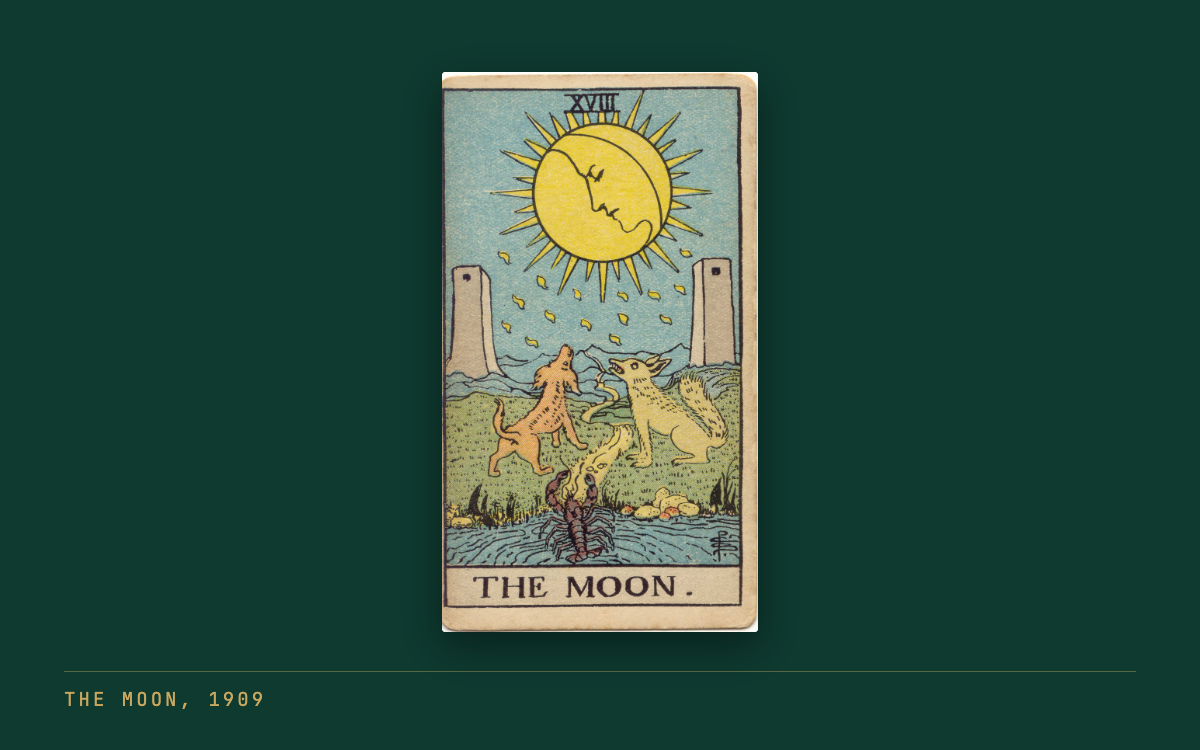
A dream dictionary is a lookup table. You arrive with an image, you find the entry, you leave with a meaning. The format is so familiar that the assumption underneath it goes unexamined, and the assumption is the problem. This piece is about why the lookup table is the wrong shape of tool for the job, which is a different complaint from saying the entries are wrong.
If you want the direct version of the argument, the reference page on why dream dictionaries do not work sets it out plainly. What follows is the longer thought: what a dictionary is for, and why dreams are not the kind of thing that has one.
What a dictionary is actually for
A dictionary works because a language is a convention held in common. When you look up a word, you are consulting a record of what a community of speakers has agreed it means. The agreement is the thing that makes the lookup possible. If English speakers each attached private meanings to words, no dictionary could be written and no conversation could happen.
A dream dictionary borrows that format and quietly asserts the same premise: that dream images are a vocabulary held in common, and that somewhere there exists a community of usage the entry is reporting.
There is not one. Nobody agreed anything. A dream is produced by one sleeping brain out of that brain's own material, and it is never uttered to anybody. There is no negotiation, no usage, no drift, none of the machinery that gives a word a shared meaning. The dictionary format is making a claim about how dreams work simply by being a dictionary, and it is making that claim before you have read a single entry.
What the research actually found
The best-supported general finding about dream content is the continuity hypothesis: what people dream about tracks what they think about and care about while awake. This is not a fringe position. It comes out of decades of content analysis and it holds up well.
The instrument that made that work possible was the coding system Calvin Hall and Robert Van de Castle published in 1966, which turned dream reports into something countable: characters, settings, activities, emotions, misfortunes. For the first time you could say what appears in dreams and in what proportion, rather than what a theorist thought appeared.
G. William Domhoff spent decades working with those norms, and the finding that matters here is this: an individual's dream content is remarkably stable across years, sometimes decades, and it maps onto that individual's own preoccupations. Long dream series belonging to one person are recognisably that person's, in a way that would let you pick them out of a stack.
Read that finding next to the dictionary premise and they are incompatible. If dream content is stable within a person and idiosyncratic between people, then the vocabulary is private by construction. The material is patterned. The pattern is yours. A table that assigns one meaning to snakes for everybody is answering a question nobody can be asked in general.
Domhoff's own position on symbol dictionaries is not ambiguous, and it is worth knowing that the person who did most of the counting also thinks the lookup approach is unsupported.
This site's own pages contradict each other, deliberately
Here is a test you can run without leaving Orivana, and it is the most direct evidence I can offer.
Open the snakes page and read the section on how other cultures read the image. In Greek medicine the snake was healing: patients slept in the temples of Asclepius specifically in order to dream, and a snake in that dream was a good sign. In Hindu tradition the coiled Kundalini is serpent energy and its rising is a spiritual event. In Haitian Vodou, Danbala is a benevolent creator spirit. The reading of the snake as deceiver is specifically the inheritance of Genesis, and it is far narrower geographically than English-language dream books assume.
Now open cats. A black cat is lucky in much of Britain and unlucky in much of the United States, out of the same body of folklore. That contradiction sits inside a single language.
These pages were not written to be inconsistent. They are reporting accurately, and the accurate report is that the traditions disagree completely. An image that means healing in one place, deceit in another and spiritual awakening in a third is not carrying meaning of its own. It is carrying whatever the tradition brought to it.
Which means that when a dream dictionary gives you the meaning of snakes, it has silently selected one tradition, usually the one nearest to hand, and presented a local inheritance as a fact about dreaming. The confident tone is the tell. Confidence is exactly what a compiler cannot honestly have here.
The corpus problem
There is a second issue, less discussed and just as damaging, and it concerns where the entries came from in the first place.
Dream dictionaries are built out of the dreams people report. People report the dreams that bothered them enough to go looking for an explanation. Nobody looks up a pleasant dream. Nobody searches for what it means to have dreamed of swimming easily in clear water, or of a friendly dog, or of a calm sea, because none of those sends anyone anywhere.
So the corpus is skewed, badly, toward the distressing. That skew then gets written back into the entries as though it were a property of the images. Water becomes overwhelming emotion. Animals become threats. Height becomes fear of failure. The whole genre acquires an anxious cast that does not reflect what people actually dream, only which dreams they go looking for afterwards.
You can see the correction in the dream pages here, which try to say when a version is common and pleasant and simply under-reported. It is not a small correction. On several images the calm version appears to be the more frequent one and is almost absent from the published literature.
The one case where research found something
It is worth naming the exception, because it shows what a real finding looks like and how little it resembles a dictionary entry.
In 2018, Naama Rozen and Nirit Soffer-Dudek at Ben-Gurion University of the Negev published a study on dreams of teeth falling out, the most looked-up dream image in English. They found the dreams associated with dental irritation on waking, particularly tension and grinding, and not associated with the psychological distress measures they also tested.
Notice what kind of claim that is. It is narrow, it is testable, it needs replication, and it points at the jaw rather than at a symbol. It is also, on its own, more evidence than the entire dictionary tradition has produced in two hundred years, and the practical advice it generates is to ask a dentist rather than to look anything up.
What to do instead
The alternative is not mysterious and it is not more work.
Write the feeling down first, before the imagery, because the feeling is the more reliable part and it degrades within minutes. A snake dream that was calm and a snake dream that was terrifying are not one dream with different weather, and any table that gives them a single entry has thrown away the informative half.
Then ask what the image is to you, specifically. Somebody who keeps reptiles and somebody bitten as a child are not producing the same dream, whatever it looks like written down. Your associations are not a soft substitute for the real meaning. Under the continuity hypothesis, they are the mechanism.
Then look at recurrence and at change. A dream that repeats is worth more attention than any single dream, and the informative thing is usually the variable that moves between occurrences rather than the image that stays fixed.
The images themselves are worth thinking about. They come with two thousand years of accumulated commentary, some of it very good, and reading Artemidorus on what a dream meant differently for a merchant and for a farmer is a better education than any modern entry. The dream material here is written to be read that way: as a body of thought about a recurring human experience, with its sources named and its disagreements left visible, rather than as a table you consult and close.