- Category
- Journeys and transport
- How common it is
- Common
- Element
- Fire
- Matching tarot card
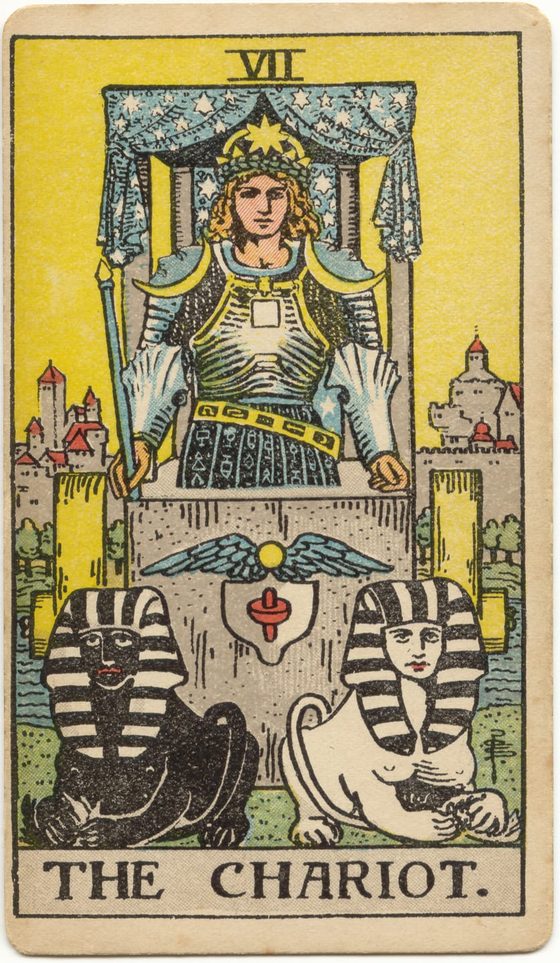
- The Chariot
Driving an out-of-control car
The brakes go, or the wheel does nothing, or you are somehow in the back seat. The dream is about the gap between being responsible for something and being able to steer it.
- control
- brakes
- momentum
- responsibility
- steering
What the dream usually describes
You are in a car that is not doing what you tell it. The brakes give way, the steering will not answer, the accelerator sticks, or you discover you are in the passenger seat or the back of a car that is nonetheless yours to control. Crashes are less common in reports than people expect; the dream usually consists of the loss of control rather than its consequence.
What it describes is a specific mismatch: you are accountable for something you cannot presently steer. That is different from being overwhelmed and different from being pursued. A car makes the point neatly, because a driver is the person everybody agrees is responsible, and the dream removes their means of acting while leaving the responsibility exactly where it was.
Waking situations with that shape are common and often unglamorous. A project run by somebody else with your name on it, a family situation you are expected to manage, a business whose costs you cannot influence, a body doing something you did not authorise. Beside being chased the threat is external and here it is structural, which is why this dream tends to feel less frightening than a pursuit dream and considerably more sickening.
The versions people actually report
Brake failure is the commonest form and the most consistent. The pedal goes to the floor, or the car slows and then does not stop, and the dreamer keeps pressing. Speed is often modest, which surprises people describing it afterwards.
The second is the back-seat version, in which the dreamer is somehow responsible for a car they are not sitting in the front of. Sometimes there is nobody driving at all. This variant reports strongly among people in situations where authority and control have come apart, and it tends to be more disturbing than the brake version.
The third is steering that does nothing: the wheel turns freely, or the car drifts across a line regardless. It arrives most often around slow, gradual situations rather than sudden ones.
Rarer forms worth noting: the car that will not start at all, which is a different dream about a different problem, and the version where the dreamer takes their hands off deliberately and the relief of doing so is the memorable part.
The feeling that comes with it
The feeling is closer to dread than to fear. People describe a sinking, procedural helplessness rather than panic: the specific sensation of doing the correct thing and having it produce no result.
That is the part worth carrying into waking life. The setting varies enormously, the sensation does not, and it is unusually easy to locate once named. Anybody who has kept escalating a problem through the proper channels and watched nothing happen recognises it immediately. If you are trying to understand one of these dreams, do not start with the car. Start with where you are currently doing everything right and getting no response.
How the analysts read it
Freud has nothing direct to say here, for the ordinary reason that mass motoring arrived after most of his dream material was written. His method still applies: The Interpretation of Dreams, in 1899, held that the manifest scene disguises a wish, and that the dreamer's own associations, not a symbol list, are what unpack it. A strict Freudian reading would ask what the dreamer wants to stop being responsible for.
Jung, after the break with Freud around 1913, would refuse the disguise premise entirely. Dreams for him compensate a one-sided conscious attitude, so a person who has been insisting they have everything under control receives a dream in which they demonstrably do not. He would also be interested in who is driving, and in the older version of this image: the chariot, where the driver's control over the vehicle is a standing metaphor for control over the self.
Later clinicians are more literal. Fritz Perls would have the dreamer speak as the car. Calvin Hall read dreams as conceptions rather than codes, and on that reading this one is simply a thought about agency, rendered as a scene.
What sleep research actually shows
There is no research on runaway-car dreams as such, and the honest thing is to say so before offering what the field does support.
The continuity hypothesis, the best-evidenced finding in dream research, holds that dream content tracks waking concerns, which is why this dream clusters around periods of reduced control rather than periods of danger. Hall and Van de Castle's content analyses, from 1966, established that misfortunes substantially outnumber good fortunes in dream reports, so a vehicle behaving badly is unremarkable as a statistical matter. Domhoff's later work treats dreaming as an intensified form of mind-wandering, which predicts preoccupations appearing as scenes rather than as coded messages.
One more thing is worth mentioning carefully, as a hypothesis rather than a finding. During REM sleep the body is largely paralysed while the brain remains highly active, and one plausible account of dreams in which action produces no result is that motor commands are being issued and no feedback is returning. That would explain a family of dreams, not this one specifically.
None of it supports a dictionary. No evidence connects a car to a fixed meaning, and the dream remains worth reading even though the symbol list is the wrong instrument for it.
How other cultures read it
The car is a twentieth-century image, so this dream has no traditional lineage at all, and the dictionaries that list it invented the entry rather than inherited it. Artemidorus, writing the Oneirocritica in the second century, treated every image conditionally, against the dreamer's occupation and standing, which is a method that transfers even though the object did not exist.
The older form of the image is the vehicle you steer with your own effort: the chariot, the cart, the boat. Plato's charioteer in the Phaedrus makes the metaphor explicit, with reason attempting to drive two horses that pull in different directions, and the tarot trump numbered seven in the 1909 Waite-Smith deck shows the same arrangement with the reins notably absent from the driver's hands.
What all these versions share, and what the modern dream keeps, is that the vehicle is a proxy for the self in motion and the question is always who is holding it.
In a relationship context
In relationships this dream arrives around situations that are moving faster than one person chose, or slower, in a direction nobody explicitly agreed. Moving in together on somebody else's timetable, a family decision made by relatives, an escalation neither person authorised.
The detail worth attending to is who else is in the car, and whether the dreamer reports trying to protect them. That is often the more informative part of the report than the vehicle. What the dream cannot do is tell you anything about a partner's intentions, and reading a runaway car as evidence that somebody else is steering your life is a conclusion about a relationship that should be reached by talking to the person, not by remembering a dream.
In a work context
This is one of the most reliably work-shaped dreams there is. It clusters around responsibility without authority: managing a project you cannot resource, holding a target set elsewhere, being accountable for a team you did not pick or a system you cannot change.
The useful signal is that the dream distinguishes overload from powerlessness, which people frequently conflate when describing their jobs. Somebody merely busy tends to dream of being chased or late. Somebody structurally unable to act tends to dream of the brakes. That distinction is worth noticing, because the two situations need different responses. It is not, on its own, a reason to leave a job, and the dream knows nothing about your options.
When it keeps coming back
Recurring versions of this dream usually track a situation rather than a trait, and they tend to stop when the control problem is resolved or when the dreamer stops accepting responsibility for something they were never able to steer. People often notice the dream stopping before they notice the situation changing.
What is worth raising with a doctor is a change in character rather than frequency: if the dream is waking you repeatedly, if it now carries a real memory such as an actual collision, or if the helplessness is following you into the day. Repeated distressing dreams are associated with several conditions, including post-traumatic stress after road accidents, and nothing here can tell you whether that applies to you. You are the only person who can describe your own sleep, and a clinician is the person to describe it to.
When it turns frightening
The frightening version usually adds passengers, or a crash that is anticipated rather than reached. Neither means the waking situation is worse than you had assessed; both are ordinary intensifications under sleep.
If it recurs badly, imagery rehearsal has the strongest clinical support for nightmares: write the dream down while awake, deliberately change what happens, and rehearse the altered version. Two practical notes as well. This dream is common after real accidents and near misses, and that version is worth taking to somebody rather than reading symbolically. And alcohol and sleep debt both increase vivid unpleasant dreaming by disturbing the last part of the night, which is worth ruling out before anything else. Compare falling, which behaves similarly.
Where this meaning came from
This symbol has almost no interpretive history, which is itself the useful fact about it. Artemidorus in the second century read images against the dreamer's own circumstances, a method that would handle a car perfectly well and never had the opportunity. The medieval dream books circulating under the name of Daniel listed images alphabetically with fixed outcomes attached and no dreamer taken into account, and they could not list something that had not been invented.
The nineteenth-century penny dream books, printed cheaply and often designed to turn dream images into numbers to bet on, are the direct commercial ancestor of the modern dictionary. Cars were added to that format in the twentieth century by people writing new entries to meet demand, not by anybody recovering an older meaning.
Freud's The Interpretation of Dreams, published in 1899, sits just before the car arrives, and its argument still applies: the associations belong to the dreamer. Compare storms, an image with a genuinely long lineage behind it.
The common misreading
The first misreading is treating the dream as a warning about driving. It gets delivered as a caution about the road, and people have changed travel plans on it. There is no evidence that dreams forecast accidents. If the dream follows a real crash or near miss that is a different matter entirely, and worth attention as a memory rather than as a prediction.
The second is reading it as a general statement that your life is out of control. That is both too large and too vague to act on, and it is usually wrong: the dream tends to point at a specific arena where control has been removed while responsibility has not. Most people can name it in a sentence when asked directly, and the sweeping version obscures the answerable one.
The third is skipping who was driving. Reports where somebody else is at the wheel, or nobody is, mean something quite different from reports where the dreamer is driving and the car will not respond, and almost every write-up collapses the two into a single entry.
Questions to sit with
- What exactly stopped working: the brakes, the steering, or your position in the car?
- Where are you doing everything correctly at the moment and getting no result?
- What are you being held responsible for that you have no actual power to change?
- Was anybody else in the car, and were you trying to protect them?
Look up the rest of what you dreamed.